
Sorting out a visa for Bali is thankfully not complicated, but there are a few things you need to keep in mind. The rules have changed over the past few years, and 2026 brings some updates too. For instance, you now have to pay a tourist tax on arrival, and new rules apply for extending your visa. In this guide you'll find everything you need to know: which visa you need, what it costs, how to apply for the electronic Visa on Arrival (e-VOA), and how to extend your visa.
Do you need a visa for Bali?
Yes, as a Dutch or Belgian citizen you always need a visa to enter Indonesia even if you're only going for a few weeks. This is different from before: until 2020, you could enter without a visa for stays of up to 30 days. Unfortunately, that option no longer exists.
The good news: for most tourists, getting a visa is quick and easy. You have two options: apply on arrival at the airport (VOA) or arrange it online in advance (e-VOA). We'll explain both below.
The Visa on Arrival (VOA)
The Visa on Arrival is the standard tourist visa for Bali and by far the most commonly used. You arrange it right at the airport on arrival, before going through customs. It costs 500,000 IDR (~€30) per person and you can pay by cash or credit card. The visa is valid for 30 days and can be extended once for another 30 days.
On arrival, follow the signs to the VOA desk. You pay, receive a receipt, and show it at customs. Simple enough — but the queues can get pretty long, especially when several flights land at the same time.
Tip: Want to skip the queue at the VOA desk? Apply for an e-VOA in advance — it'll save you a lot of waiting time on arrival.
The e-VOA: apply online in advance
Want to walk straight through on arrival? Then the e-VOA is the smart choice. You apply in advance via the official website of the Indonesian immigration service: evisa.imigrasi.go.id. The cost is the same: 500,000 IDR (~€30). After your application, you'll receive a QR code by email. At Bali's airport you can use this to go through the e-gates, without having to wait at a desk.
Tip: Always take a screenshot of your QR code so you can access it even without wifi.
NB: Apply for your e-VOA through the official government website (evisa.imigrasi.go.id). There are many commercial parties offering the same service at a higher price — that's completely unnecessary. The official website is easy to navigate these days.
What do you need on arrival?
Whether you have a VOA or e-VOA, there are a few things you need to have in order when you arrive in Bali. Your passport must be valid for at least 6 months on arrival. You'll also need to show an onward ticket if asked — proof that you'll be leaving Indonesia again.
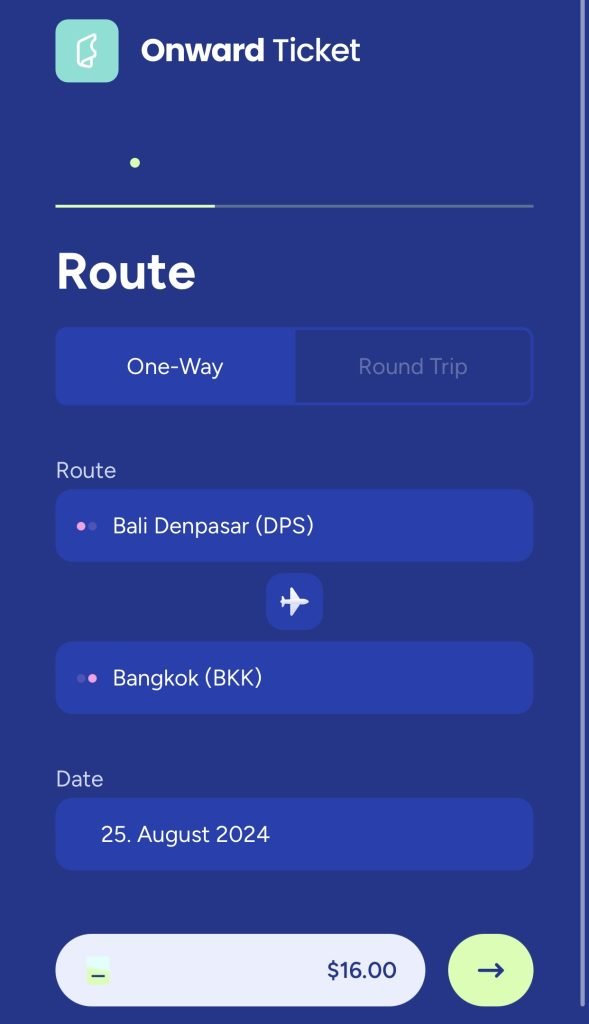
Tip: Not sure exactly when you're leaving, or thinking about extending your visa? Then buy an Onward Ticket. For around €16 you'll have a temporarily valid ticket that lets you enter the country. In our guide on Onward Tickets you can read exactly how that works.

Extending your visa
Want to stay in Bali for more than 30 days? You can extend your VOA or e-VOA once for 30 additional days, giving you a total of 60 days.
Update 2025: Since May 2025, you are required to visit the immigration office in person for your extension, where fingerprints are taken and a photo is made. Online renewal is no longer possible. You still upload your documents via evisa.imigrasi.go.id, but a visit to immigration can no longer be avoided.
Don't want to handle the extension yourself? You can outsource it to a visa agency in Bali. They'll take care of the paperwork and guide you through the visit to the immigration office. We used this service ourselves and definitely recommend it — especially now that an in-person visit is required. Bear in mind that you'll be without your passport for a few days to weeks, so make sure you carry a copy at all times.
Tip: Start the extension process as soon as possible after arrival if you know you'll be staying longer than 30 days. The whole process took us about 3.5 weeks, and during that time our passport was with the visa agency.
NB: The immigration office can be extremely busy. Go early — ideally before opening time. We arrived at opening time and still had 100 numbers ahead of us. We ended up waiting about two hours before it was our turn.



Bali Tourist Tax
Since February 2024, you pay a mandatory tourist tax of 150,000 IDR (~€9) per person on arrival in Bali. This applies to everyone arriving directly from abroad.
You can arrange this in advance via lovebali.baliprov.go.id or the I Love Bali app. You'll then receive a QR code. We recommend doing this at home — it saves you the hassle and the long queues on arrival.
SATUSEHAT Health Pass
Since September 2024, you need to fill in a digital health declaration before arriving in Indonesia: the SATUSEHAT Health Pass. You do this via the official website (allindonesia.imigrasi.go.id) or app. After completing it, you'll receive a QR code to scan on arrival. Note: you can only do this 3 or 4 days before your arrival in Indonesia.
Tip: Do this at home before you leave, so you're not dependent on wifi at the airport. And take a screenshot of this one too.
Staying in Bali for more than 60 days?
Want to stay more than 60 days in Bali? Then you'll either need to leave the country and re-enter with a new visa — also known as a visa run — or apply for a different type of visa in advance.
The most commonly used options for long-stay visitors are the B211A visa (up to 180 days) and the C1 visa (60 days, extendable twice up to 6 months). Always check the latest information via evisa.imigrasi.go.id or get advice from a visa agency in Bali.
NB: Never stay longer than your visa allows. For every day you overstay in Indonesia you risk a fine. They are strict about this — don't count on any leniency.
Are you heading to Bali soon? Also read our complete Bali guide with the best destinations, activities and tips.

You might also like





 English
  Dutch
Dutch
Leave a reply